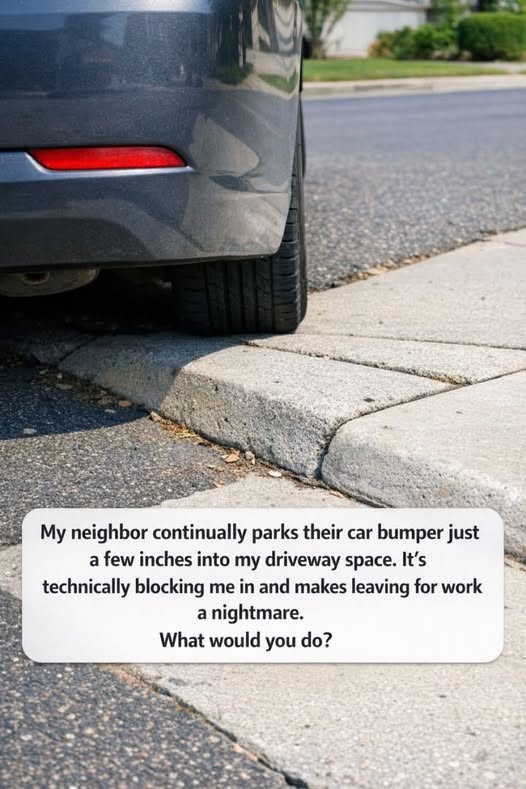
Parking issues can be a significant source of stress and frustration, especially when it involves your own driveway.
For many, the driveway represents a personal space that should be inviolable.
However, when a neighbor encroaches upon this space, even by just a few inches, it can feel like a violation.
This seemingly small act can have a huge impact on your daily routine, especially when it makes leaving for work a complicated task.
When your neighbor’s car consistently blocks your driveway, even if only slightly, it can create a dilemma that requires immediate attention.
Not only does it physically obstruct your ability to leave your home efficiently, but it also introduces a layer of tension into the neighborly relationship. Addressing this issue requires a strategic approach to avoid exacerbating the situation while ensuring that your parking space remains accessible.
1. Start By Documenting Exactly What’s Happening
The first step in addressing any parking dispute is to document the situation clearly. Take photographs each time your neighbor’s car encroaches upon your driveway, ensuring that the time and date are visible in the photo metadata. Aim for multiple angles that clearly show the overlap and any impact it has on your ability to access your driveway.
Be precise in your documentation, noting the exact measurements if possible. Use a tape measure to determine how many inches of your driveway are being blocked. Keeping a log over several days or weeks can establish a pattern of behavior that may be necessary for future discussions or actions.
2. Double-Check Local Parking And Driveway Laws
Before confronting your neighbor, it’s important to familiarize yourself with local parking and driveway regulations. These laws often dictate how far a vehicle must be from a driveway and any penalties for violations. For example, in many areas, parking within a few feet of a driveway entrance is prohibited.
Contact your local city hall or visit municipal websites to find specific statutes or ordinances related to driveway access and parking. Knowing these laws will provide you with a solid foundation for any discussions or disputes.
3. Have A Calm, Direct Conversation With Your Neighbor
Once you have documented evidence and understand the legal framework, the next step is to have a calm and direct conversation with your neighbor. Choose a time when neither of you are rushed or stressed. Approach them politely and express your concerns about the parking issue.
Use ‘I’ statements to avoid sounding accusatory, such as ‘I’ve noticed that your car sometimes extends into my driveway by a few inches, and it makes it difficult for me to leave for work.’ This approach can help maintain a cordial relationship while addressing the problem.
4. Use Visual Cues: Cones, Chalk Lines, And Boundary Markers
If a conversation doesn’t yield results, consider using visual cues to delineate your driveway’s boundary. Place cones or reflective markers along the edge of your driveway to signal the boundary clearly.
Another option is to use chalk to draw a line indicating where your property begins. This non-verbal communication can serve as a gentle reminder for your neighbor to park within their own space.
5. Follow Up In Writing So There’s A Clear Record
If the issue persists, follow up your conversation with a written note or email. This provides a clear record of your attempts to resolve the issue amicably. Be polite but firm in your communication, reiterating your concerns and the impact on your daily life.
Keep a copy of this communication for your records. This documentation can be crucial if the situation escalates or if you need to involve authorities or a third party.
continued on the next page