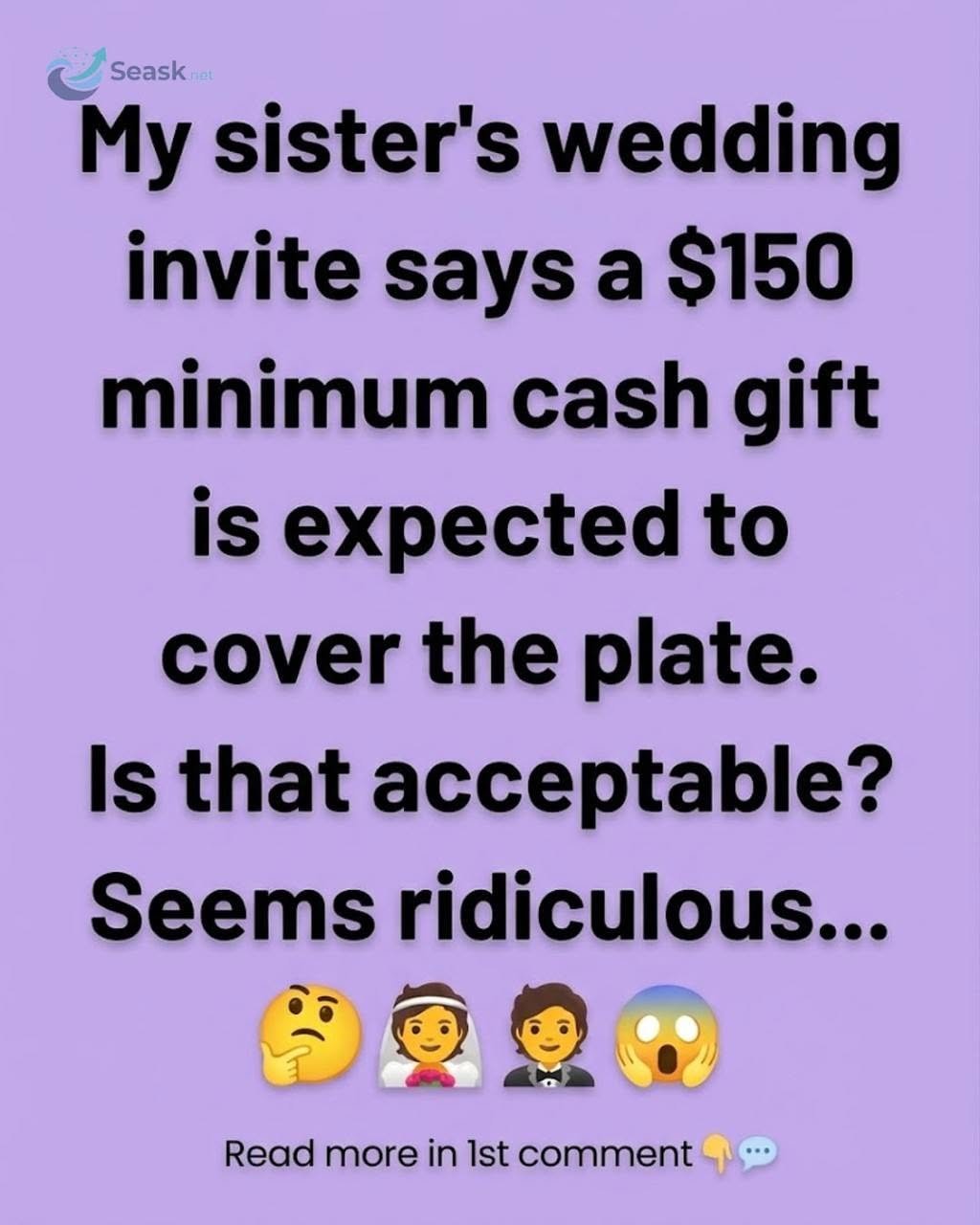
Is it rude to ask wedding guests for a minimum cash gift… or is it becoming the new normal? See more
Is It Rude to Ask Wedding Guests for a Minimum Cash Gift… or Is It Becoming the New Normal?
Weddings have always been about more than just two people saying “I do.” They are celebrations of love, family, friendship, and tradition. Yet in recent years, a new wedding debate has emerged that is dividing couples, guests, etiquette experts, and social media users alike:
Is it rude to ask wedding guests for a minimum cash gift?
What was once considered unthinkable is now appearing on wedding invitations, RSVP cards, wedding websites, and even social media announcements. Some couples are openly stating that guests should contribute a specific amount of money if they plan to attend. Others are suggesting a minimum gift value to help cover the rising costs of hosting a wedding.
Supporters argue that weddings have become incredibly expensive and that guests should contribute fairly if they expect to enjoy the celebration. Critics, however, believe that putting a price tag on attendance transforms a joyful event into a commercial transaction.
So where is the line between practicality and poor etiquette? Is requesting a minimum cash gift a sign of changing times, or is it still considered rude by most standards?
Let’s explore both sides of this growing controversy.
The Rising Cost of Modern Weddings
To understand why some couples are making these requests, it’s important to look at the financial reality of modern weddings.
Over the last decade, wedding costs have increased dramatically. Venues, catering, photography, entertainment, decorations, flowers, transportation, and accommodations can quickly add up to tens of thousands of dollars.
For many couples, especially younger generations facing student loans, high housing costs, and economic uncertainty, paying for a wedding can be overwhelming.
Some couples find themselves asking difficult questions:
Why should we spend thousands of dollars hosting guests who bring no gift?
Is it unreasonable to expect attendees to contribute something?
Should guests help offset the cost of the event they’re enjoying?
These questions have become increasingly common in wedding planning discussions.
Many couples view cash gifts not as optional presents but as a practical way to begin married life. Instead of receiving household items they may not need, they prefer financial contributions toward a home, honeymoon, debt repayment, or future plans.
As a result, some have begun taking the idea one step further by specifying a minimum amount.
The Traditional View of Wedding Gifts
Historically, wedding gifts were exactly that: gifts.
They were voluntary expressions of support and celebration.
Guests selected presents based on their relationship with the couple, their financial circumstances, and personal preference.
The key word was always “voluntary.”
Traditional etiquette experts have long maintained that invitations should never imply an obligation to provide a gift.
According to classic wedding etiquette principles:
Guests are invited because the couple wants them present.
Attendance should never require payment.
Gifts should be appreciated but never demanded.
The value of a gift should not determine a guest’s worth.
Under these standards, requesting a minimum cash gift is considered inappropriate because it creates financial expectations.
Critics argue that once a minimum amount is specified, the gift ceases to be a gift and becomes an entry fee.
That distinction is at the heart of the controversy.