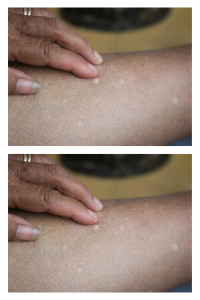
White spots on the skin can be unsettling, especially when they appear suddenly or begin to spread. Many people notice them only under bright bathroom lights, after a shower, or during seasonal changes — moments when skin irregularities become easier to spot. While these pale patches are often harmless, they sometimes point toward an underlying nutritional deficiency that affects the body’s ability to produce melanin, the pigment responsible for skin color. Two vitamins in particular play a major role in keeping pigmentation even: vitamin B12 and vitamin D. When levels of these nutrients fall, melanin production may become disrupted, leading to lighter areas or uneven tone. Understanding these connections can help you identify early signs and support healthier skin from the inside out.
Vitamin B12 Deficiency
Vitamin B12 is essential for proper cell development, DNA synthesis, and the biological processes that regulate skin pigmentation. When the body lacks enough B12, melanin production can slow or misfire, potentially contributing to:
-
general hypopigmentation (lighter patches)
-
vitiligo-like depigmentation in some cases
-
-
slower skin repair after inflammation
Vegetarians, vegans, older adults, and people with absorption issues (such as those with gastrointestinal disorders) are at a higher risk of B12 deficiency, since the vitamin is found almost exclusively in animal-based foods. Low B12 levels may also trigger symptoms beyond the skin, such as fatigue, numbness or tingling, dizziness, or difficulty concentrating — signs that should never be ignored.
Recent Articles
-