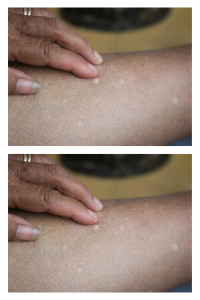
Balanced nutrition not only improves skin appearance but also strengthens the body’s ability to heal from irritation, inflammation, or minor infections that can lead to white patches.
When White Spots Are Not Caused by Deficiencies
Not all pale patches stem from low vitamin levels. Other common causes include:
-
fungal infections (such as tinea versicolor)
-
eczema or dermatitis
-
post-inflammatory hypopigmentation (after acne, burns, or rashes)
-
autoimmune conditions like vitiligo
Because many of these conditions look similar, a dermatologist’s evaluation is essential if:
-
white spots spread
-
they don’t fade with time
-
they itch, flake, or irritate
-
you’re unsure of the cause
The Bottom Line
White spots on the skin aren’t always a cause for alarm, but they should never be ignored. Nutrient deficiencies — especially vitamin B12 and vitamin D — can play a significant role in pigmentation issues, and correcting them may improve both skin appearance and overall health. With a combination of balanced nutrition, proper sunlight exposure, and guidance from a dermatologist, you can support more even, resilient skin and catch potential problems early.