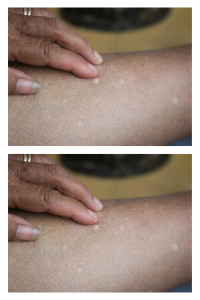
Vitamin D Deficiency
Vitamin D, often called the “sunshine vitamin,” plays an important role in skin regeneration and immune function. deficiency can indirectly influence pigmentation by affecting how skin cells mature and respond to irritation or inflammation.
People most likely to experience vitamin D deficiency include those who:
-
spend most of their time indoors
-
live in areas with long winters
-
have darker skin (which naturally produces vitamin D more slowly)
-
regularly use sunscreen without dietary supplementation
Low vitamin D is not always the direct cause of white spots, but it can make existing pigmentation issues more noticeable or harder for the skin to recover from.
Minerals That Influence Skin Pigmentation
Certain minerals are crucial for maintaining healthy skin color and structure:
• Zinc:
Supports skin repair, reduces inflammation, and helps stabilize melanin production.
Directly involved in melanin formation. Low copper levels can interfere with pigmentation and cause lighter patches over time.
• Calcium:
Not typically a cause of white spots, but important for overall skin barrier strength and cell turnover.
A diet lacking these minerals can weaken the skin’s resilience and make discoloration more obvious.
Nutrition for Healthier, Even-Toned Skin
To support consistent pigmentation and overall skin health, incorporate foods that supply vitamins B12, D, zinc, and copper. Helpful options include:
-
-
leafy greens
-
fortified cereals and plant-based milks
-
nuts and seeds
-
legumes
-
eggs and dairy
-
lean meats or fish
Recent Articles
-